Art Therapy: A Creative Path to Releasing Stress and Improving Focus
Introduction
In today’s fast-moving world, stress has quietly become a part of everyday life. Constant notifications, demanding schedules, work pressure, academic expectations, and personal responsibilities often leave people mentally exhausted. While exercise, meditation, and mindfulness are widely recommended for stress management, there is another powerful approach that is often overlooked—art therapy.
Art therapy is much more than drawing or painting beautiful pictures. It is a scientifically informed therapeutic approach that uses creative expression to support emotional well-being, reduce stress, improve concentration, and encourage self-discovery. The beauty of art therapy lies in the fact that artistic talent is not required. The process of creating matters far more than the final artwork.
Whether you are a student struggling to focus, a professional dealing with burnout, a homemaker balancing multiple responsibilities, or someone simply looking for inner peace, art therapy offers a safe and effective way to reconnect with yourself.
This article explores what art therapy is, how it helps release stress, why it improves focus, and how you can incorporate simple creative practices into your daily life.
What Is Art Therapy?
Art therapy is a structured process of expressing thoughts, emotions, memories, and experiences through creative activities. Instead of relying only on words, it allows individuals to communicate through colors, shapes, textures, patterns, and visual symbols.
Creative activities commonly used in art therapy include:
- Mandala drawing
- Dot mandala art
- Sketching
- Watercolor painting
- Coloring
- Journaling with illustrations
- Collage making
- Clay modeling
- Mixed media art
- Texture art
Unlike traditional art classes, art therapy focuses on emotional expression rather than artistic perfection. Every stroke, color choice, and pattern reflects an individual’s unique emotional experience.
The goal is not to create a masterpiece but to create space for healing, relaxation, and self-awareness.
Why Stress Affects Both Mind and Body
Stress is the body’s natural response to challenges. While short-term stress can improve performance, prolonged stress affects nearly every system in the body.
Common symptoms of chronic stress include:
- Constant overthinking
- Difficulty concentrating
- Irritability
- Poor sleep quality
- Fatigue
- Headaches
- Muscle tension
- Low motivation
- Anxiety
- Emotional exhaustion
When stress remains unmanaged, the brain stays in a constant state of alertness. This makes it difficult to focus, solve problems, remember information, or remain emotionally balanced.
Art therapy interrupts this cycle by shifting the brain away from constant worry and into a creative state of mindful engagement.
How Art Therapy Helps Release Stress
1. Encourages Emotional Expression
Many emotions are difficult to explain through words. Creative activities provide an alternative language for expressing feelings safely.
A person experiencing anxiety may naturally choose darker colors, repetitive patterns, or bold strokes without consciously planning them. During the creative process, hidden emotions gradually become easier to recognize and understand.
This emotional release often creates a feeling of mental lightness and calm.
2. Reduces Mental Overload
Our minds process thousands of thoughts every day. Many of these thoughts repeat continuously, creating mental fatigue.
Art therapy redirects attention from endless thinking to purposeful creation.
Instead of worrying about yesterday or tomorrow, the brain focuses on:
- Choosing colors
- Drawing patterns
- Blending textures
- Creating symmetry
- Completing shapes
This shift naturally reduces mental clutter.
3. Creates a State of Mindfulness
Mindfulness means paying full attention to the present moment.
Creative activities naturally encourage mindfulness because they require gentle attention without pressure.
As you slowly draw lines, paint shapes, or create mandalas, your breathing often becomes slower and deeper. Your heart rate settles, and the body begins to relax.
This calm state allows the nervous system to recover from continuous stress.
4. Activates the Brain’s Creative Network
Stress often activates the brain’s survival mode, making logical thinking and creativity more difficult.
Creative expression stimulates areas of the brain associated with imagination, planning, emotional regulation, and problem-solving.
This balanced brain activity helps individuals feel calmer while improving their ability to think clearly.
5. Builds Emotional Resilience
Regular creative practice teaches an important life lesson:
Not everything needs to be perfect.
Accepting imperfect lines, unexpected colors, or changing designs gradually reduces perfectionism.
This mindset improves emotional flexibility and helps people respond more positively to everyday challenges.
How Art Therapy Improves Focus
Focus is not simply about paying attention.
True concentration depends on mental clarity, emotional balance, and reduced distractions.
Art therapy supports all three.
Improves Attention Span
Creating artwork requires sustained attention.
Whether drawing a mandala, coloring detailed patterns, or painting textures, the brain practices staying with one task for an extended period.
Over time, this strengthens concentration.
Reduces Digital Distractions
Modern lifestyles expose people to continuous notifications and screen time.
Art therapy offers a healthy offline activity that encourages uninterrupted attention.
Even twenty minutes of creative work provides the brain with valuable rest from digital overload.
Improves Memory
Creative activities involve observation, sequencing, planning, and visual processing.
These mental exercises strengthen memory and cognitive flexibility.
Students often notice better information retention after including regular creative breaks in their study routine.
Enhances Problem-Solving Skills
Art rarely follows a fixed formula.
Every creative decision involves experimentation.
Should the next color be darker?
Should the design remain symmetrical?
Should another layer be added?
These small creative choices strengthen flexible thinking and decision-making.
Creates Flow State
Psychologists often describe a highly focused mental condition known as “flow.”
During flow:
- Time passes quickly.
- Distractions disappear.
- Creativity increases.
- Productivity improves.
- Stress decreases.
Mandala art, painting, and detailed creative projects frequently help people enter this deeply focused state.
The Unique Benefits of Mandala Art Therapy
Among all creative techniques, mandala art has become especially popular for relaxation and concentration.
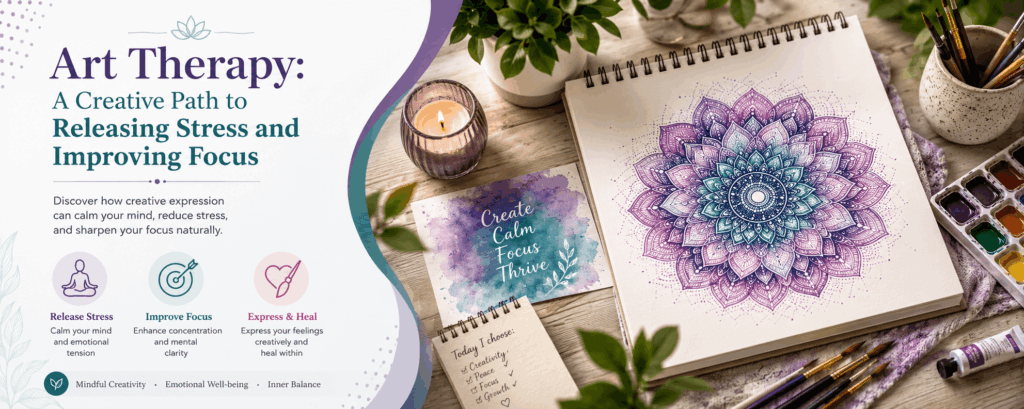
A mandala is a circular geometric design created using repeated shapes and balanced patterns.
The repetitive nature of mandala drawing creates several psychological benefits.
Promotes Inner Calm
Repeating similar patterns encourages rhythmic breathing and gentle concentration.
This creates a calming effect on the mind.
Reduces Anxiety
Structured designs provide a sense of stability during emotionally overwhelming situations.
Many people experience reduced anxious thoughts while working on mandalas.
Improves Patience
Mandalas cannot be rushed.
They teach consistency, attention to detail, and mindful progress.
Encourages Self-Reflection
Every mandala becomes a personal visual journal.
Color choices, shapes, and designs often reflect emotional experiences without requiring words.
Art Therapy Activities You Can Practice at Home
One of the greatest advantages of art therapy is accessibility.
You do not need expensive materials or professional equipment.
Simple activities include:
Daily Mandala Drawing
Spend fifteen to twenty minutes drawing circular patterns.
Avoid judging your work.
Simply enjoy the process.
Creative Journaling
Combine writing with sketches, colors, symbols, or decorative borders.
This helps organize thoughts while reducing emotional pressure.
Watercolor Relaxation
Allow colors to flow naturally across paper without planning the outcome.
The unpredictability encourages acceptance and reduces perfectionism.
Texture Art
Experiment with different textures using palette knives, sponges, or thick paint.
The sensory experience provides additional relaxation.
Gratitude Art
Instead of writing three things you’re grateful for, illustrate them.
Drawing positive experiences strengthens emotional awareness and optimism.
Who Can Benefit from Art Therapy?
Art therapy supports people of all ages.
Students
- Better concentration
- Reduced exam stress
- Improved creativity
- Enhanced memory
Working Professionals
- Burnout recovery
- Stress reduction
- Better work-life balance
- Increased productivity
Homemakers
- Emotional relaxation
- Personal self-care
- Creative fulfillment
- Improved mental wellness
Senior Citizens
- Cognitive stimulation
- Memory support
- Emotional connection
- Relaxation
Children
- Emotional expression
- Better communication
- Increased confidence
- Improved attention span
Building a Daily Art Therapy Routine
Creating a consistent routine produces the greatest long-term benefits.
A simple daily practice may look like this:
Morning:
Spend ten minutes creating simple patterns before beginning work.
Afternoon:
Take a short creative break instead of scrolling through social media.
Evening:
Complete a small mandala, watercolor painting, or journal page while reflecting on your day.
Consistency is far more valuable than spending several hours only occasionally.
Even fifteen mindful minutes each day can gradually improve emotional well-being.
Common Myths About Art Therapy
Myth 1: I Cannot Draw
Reality:
Art therapy values expression, not artistic skill.
Simple shapes and colors are enough.
Myth 2: Only Children Benefit
Reality:
Adults often experience equally significant emotional benefits.
Many professionals use creative practices to reduce workplace stress.
Myth 3: It Is Just a Hobby
Reality:
Creative expression supports emotional regulation, mindfulness, and cognitive functioning.
Its value extends beyond recreation.
Myth 4: Results Are Immediate
Reality:
Like meditation or exercise, art therapy works best through regular practice.
Small daily sessions produce meaningful long-term improvements.
Tips to Maximize the Benefits of Art Therapy
To make the most of your practice:
- Create without comparing yourself to others.
- Focus on the process rather than perfection.
- Choose colors based on your emotions instead of rules.
- Practice regularly, even for short periods.
- Keep a dedicated sketchbook or journal.
- Work in a quiet, comfortable environment.
- Allow yourself complete creative freedom.
Remember, there are no mistakes in therapeutic art—only opportunities for exploration and self-expression.
Conclusion
Art therapy offers a gentle yet powerful way to reduce stress, improve focus, and reconnect with your inner self. In a world filled with constant distractions and emotional pressure, creative expression provides a much-needed pause—a chance to slow down, breathe deeply, and process emotions in a healthy way.
Whether you choose mandala drawing, creative journaling, watercolor painting, or texture art, every creative session becomes an opportunity to cultivate mindfulness, emotional resilience, and mental clarity. You do not need expensive materials or advanced artistic skills. What matters most is your willingness to engage with the process and allow creativity to become a form of self-care.
By dedicating even a few minutes each day to intentional creative expression, you can gradually experience greater calm, sharper focus, improved emotional balance, and a stronger connection with yourself. Art therapy is not about creating perfect artwork—it is about creating a healthier mind, a calmer heart, and a more balanced life.
If you’re looking for a meaningful, enjoyable, and sustainable way to support your mental well-being, let creativity become part of your daily routine. Sometimes, the simplest brushstroke or the smallest mandala pattern can mark the beginning of a more peaceful and focused life.
SEO Keywords Naturally Included
Art therapy, benefits of art therapy, art therapy for stress relief, how art therapy reduces stress, improve focus naturally, mandala art therapy, creative mindfulness, mental wellness activities, stress management techniques, emotional healing through art, journaling for mental health, mandala drawing benefits, creative self-care, focus improvement techniques, relaxation through art, mindfulness activities, art for anxiety relief, therapeutic art exercises, emotional well-being, creative healing.